Why Mirror Selfies Don't Match How Clothes Actually Fit in Person
Quick Answer: Mirror selfies distort fit mainly through camera lens angle and distance (phone cameras held close create mild distortion), unconscious posture changes when posing for a photo versus standing naturally, and lighting differences — all of which change the visual result without the actual outfit or body changing at all.
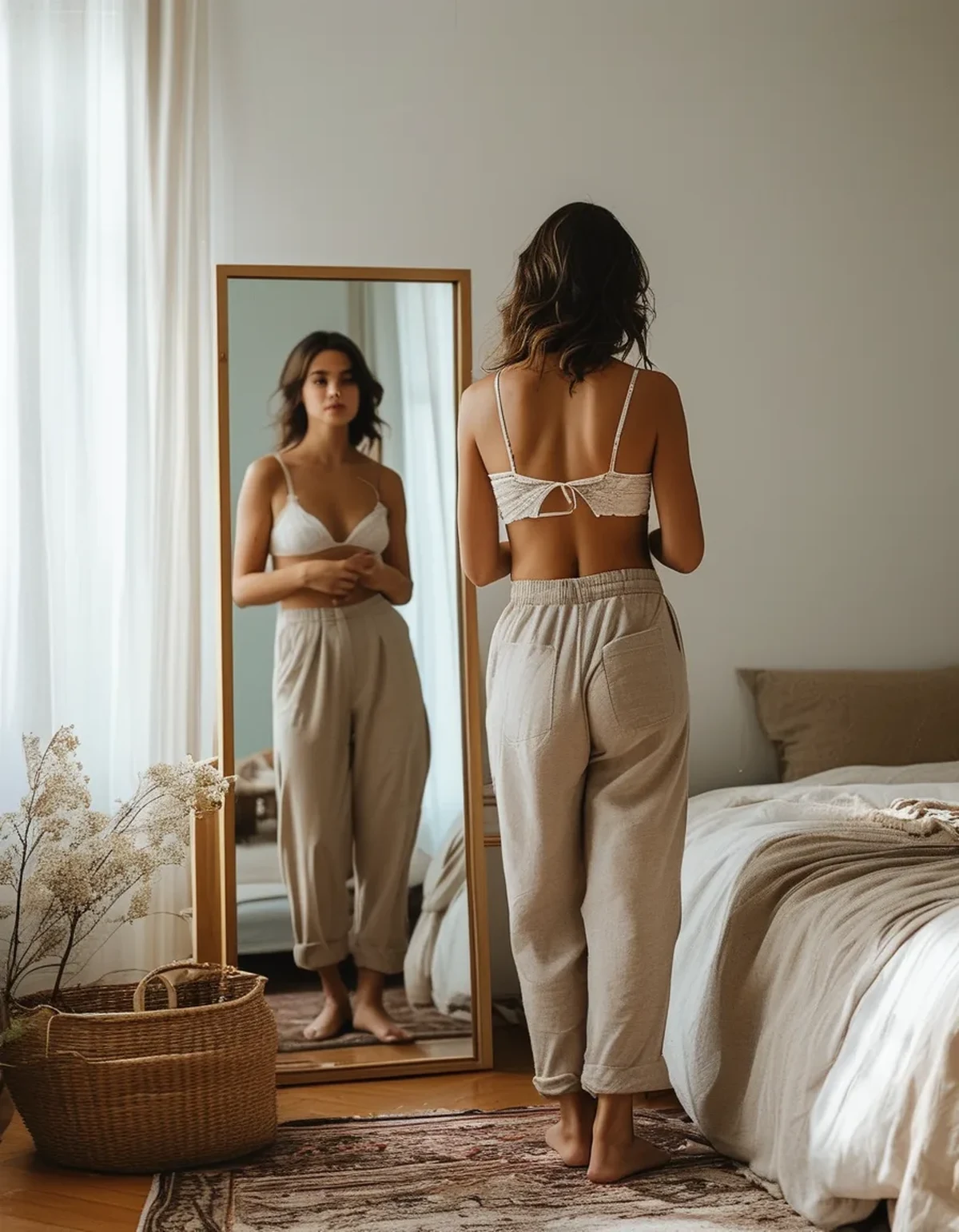
The outfit looked good in the mirror, felt good walking around the room, and then looked completely different the second a phone came out to snap it. Nothing about the body or the clothes changed in that half-second — but plenty about the photo did.
Why does phone camera distance change how an outfit looks in a mirror selfie?
Phone cameras, especially when held at arm’s length for a mirror selfie, are typically much closer to the body than the distance from which someone would naturally view themselves in a mirror, and that closer distance combined with a wide-angle lens (standard on most phone front and rear cameras) introduces mild barrel distortion that can subtly widen or elongate whatever’s closest to the lens, changing proportions in ways a natural, farther-away mirror glance never would.
Does posture actually change unconsciously when someone poses for a selfie versus just looking in the mirror?
Yes, almost universally — people naturally straighten posture, suck in slightly, angle their body, and hold a specific expression the instant a camera comes out, none of which reflects how the outfit sits during normal movement and standing throughout the day, meaning the selfie captures a brief, atypical pose rather than a representative sample of how the fit actually looks in regular use.
Is lighting really enough to change how an outfit’s fit reads in a photo?
Significantly, yes — overhead lighting (common in bathrooms and bedrooms where mirror selfies get taken) creates shadows that fall differently than the more even, diffused lighting of a well-lit store fitting room or outdoor daylight, and those shadows can visually add or remove perceived shape and volume in ways that have nothing to do with the actual garment fit.
Why Your Mirror Selfie Never Quite Matches What You Saw Five Minutes Earlier
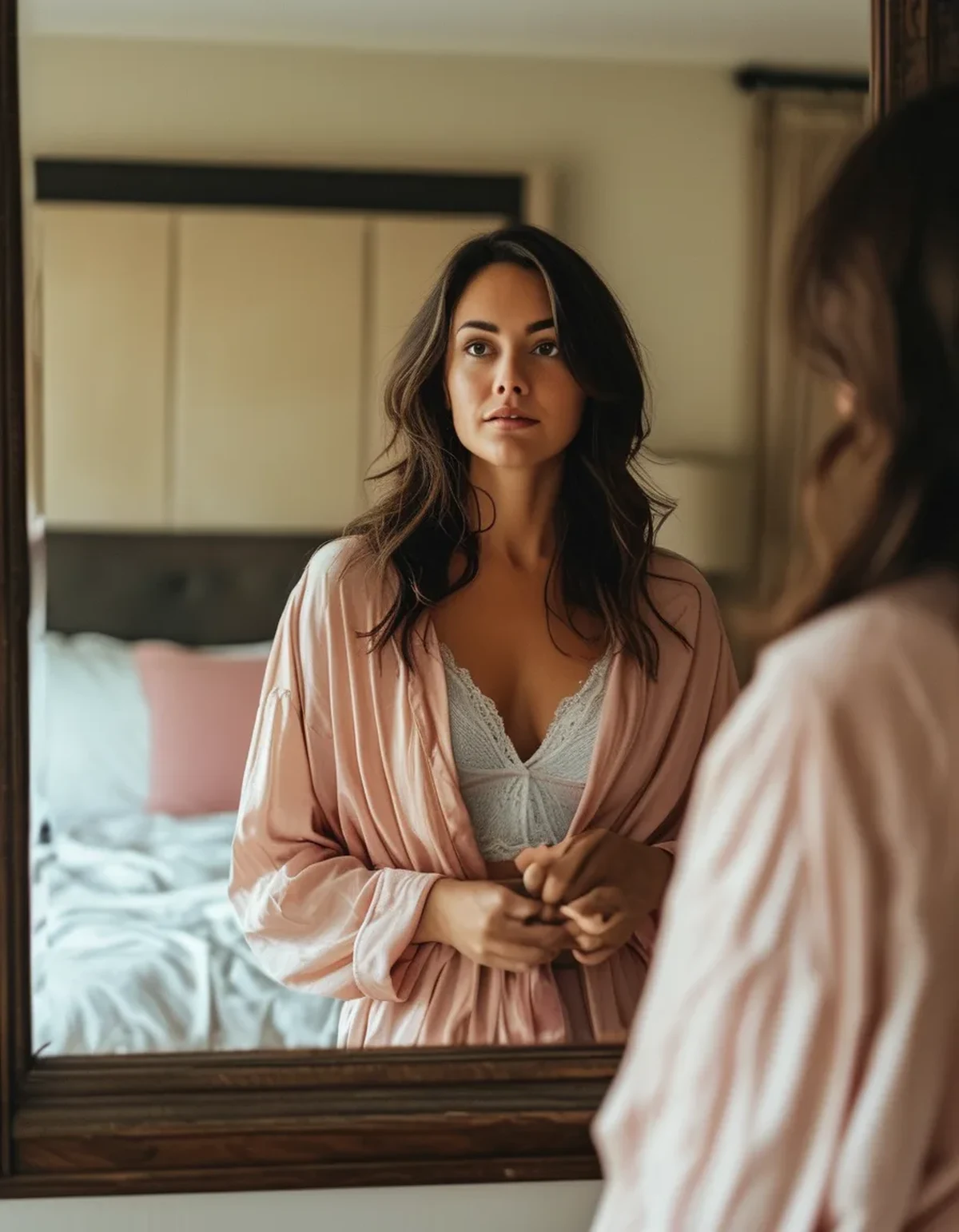
The combination of closer camera distance, an unconscious posture shift, and different lighting means a mirror selfie is essentially capturing a different moment under different conditions than the casual glance that happened minutes before — treating the selfie as the ‘true’ representation and the earlier glance as somehow wrong gets the relationship backward, since neither is more accurate than the other, they’re just different snapshots of the same outfit under different circumstances.
Does the angle the phone is held at matter as much as the distance?
It matters even more in some cases — a phone held slightly above eye level tends to visually slim and elongate, while one held below eye level can foreshorten and widen, meaning the exact same outfit on the exact same body can look meaningfully different in two selfies taken seconds apart just from a few inches of camera angle change, independent of any lens distortion or lighting difference.
FAQ: Mirror Selfies and Real Fit, Answered
Is there a more accurate way to check how an outfit actually fits than a mirror selfie?
Stepping back further from the mirror (arm’s length plus a few extra feet) and taking the photo on a timer rather than holding the phone close reduces both the distance-related distortion and the unconscious camera-pose reflex, giving a more representative result.
Should mirror selfies be trusted less than in-person mirror checks overall?
Neither should be treated as the single ‘correct’ read — using a normal in-person glance for a general sense and a timer-based, slightly-distanced photo for a documented record together give a more complete and consistent picture than relying on either alone.
Does this distortion happen with all phone cameras equally?
Wide-angle front-facing cameras (common for phone selfie mode) tend to show more of this close-distance distortion than a phone’s main rear camera, so a mirror selfie taken with the rear camera and timer, from a bit farther away, is typically less distorted than the standard close-up front camera selfie.
TL;DR:
- Close camera distance during mirror selfies introduces mild lens distortion a normal mirror glance doesn’t have
- Posture shifts unconsciously the moment a camera appears, changing how the outfit visually sits
- Lighting differences between where selfies get taken and where outfits get worn affect how fit reads
- A timer photo from farther back gives a more representative result than a close, held selfie
A mirror selfie that doesn’t match the earlier in-person glance isn’t lying about the outfit — it’s just a different snapshot, taken closer, under different light, in a pose nobody actually holds while going about their day.
Keep Reading
This article is for general informational and styling purposes only. Fit, sizing, and product availability may vary.
