Why a Product's Online Review Photos Never Quite Match What You See in Your Own Mirror
Quick Answer: Review photos are almost always taken with more flattering lighting, a slight upward or angled camera position, and a posed stance held for a single flattering frame — none of which match the flat, straight-on lighting and natural standing posture of a home mirror, so the gap you’re noticing is a real photography difference, not a sign the garment fits you wrong.
A five-star review photo represents one carefully chosen second out of many attempts, not an accurate baseline for comparison.
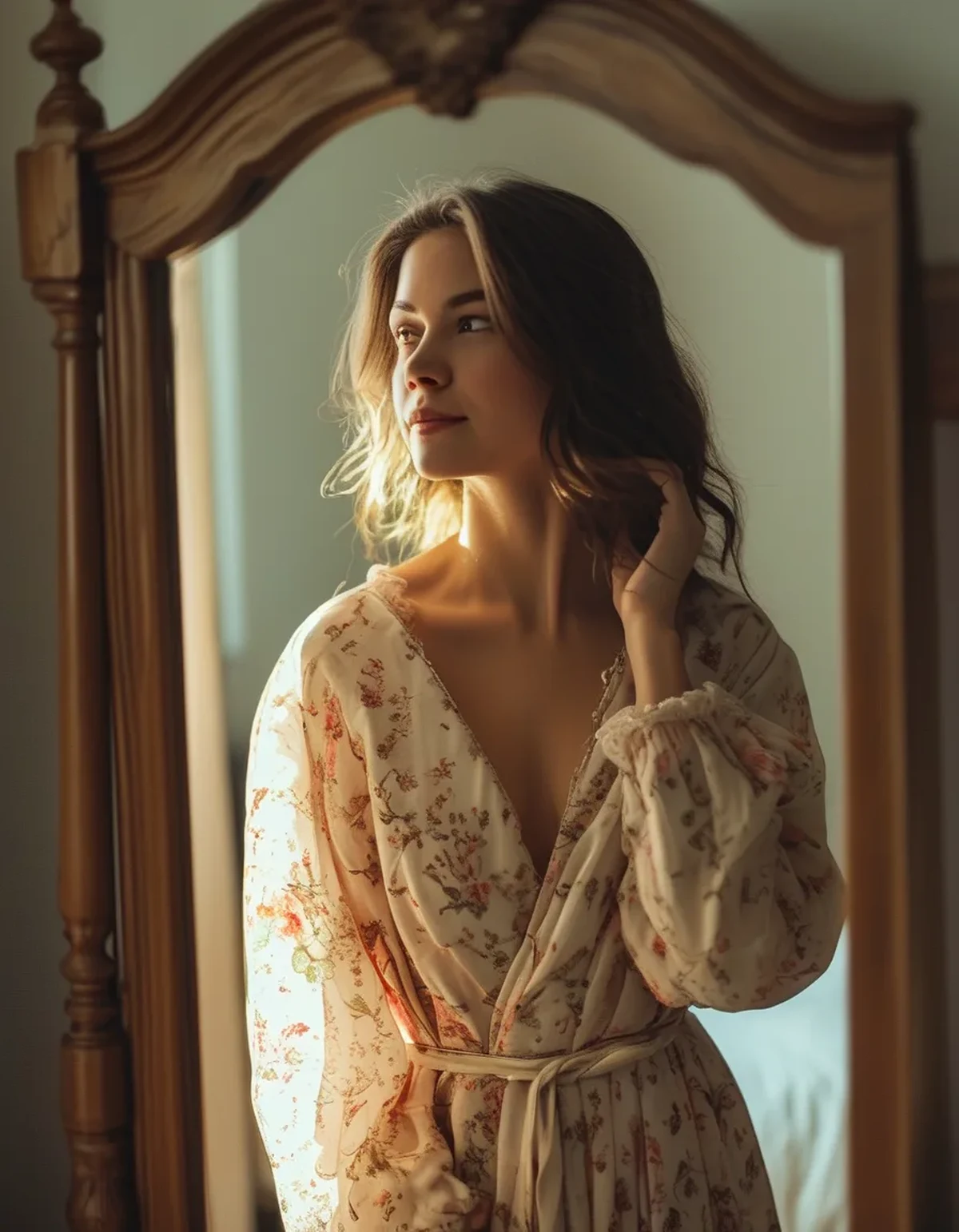
How much does lighting actually change the visual result?
Substantially — most review and product photos use soft, directional lighting (often from slightly above and to the side) that creates gentle shadows emphasizing shape and reducing the appearance of texture or fabric wrinkling, while typical bathroom or bedroom lighting is flatter, harsher, or comes from an unflattering angle that reveals every crease and shadow a garment naturally has.
Does camera angle make a measurable difference in how an outfit reads?
Yes — a camera positioned slightly below eye level and angled up elongates the body and legs in a photo, which is a common technique in styled product photography, while a mirror gives a straight, undistorted reflection at your actual eye level, meaning the same outfit can look proportionally different simply from the angle it’s being viewed from.
What’s actually happening with posture in a posed photo versus a mirror check?
A posed photo typically captures a held stance — weight shifted onto one leg, shoulders pulled back, chin slightly forward — chosen and refined over several attempts specifically because it looks best, while checking a mirror usually happens in a natural, relaxed standing position without that same deliberate posing, which changes how fabric drapes and where it catches or pulls.
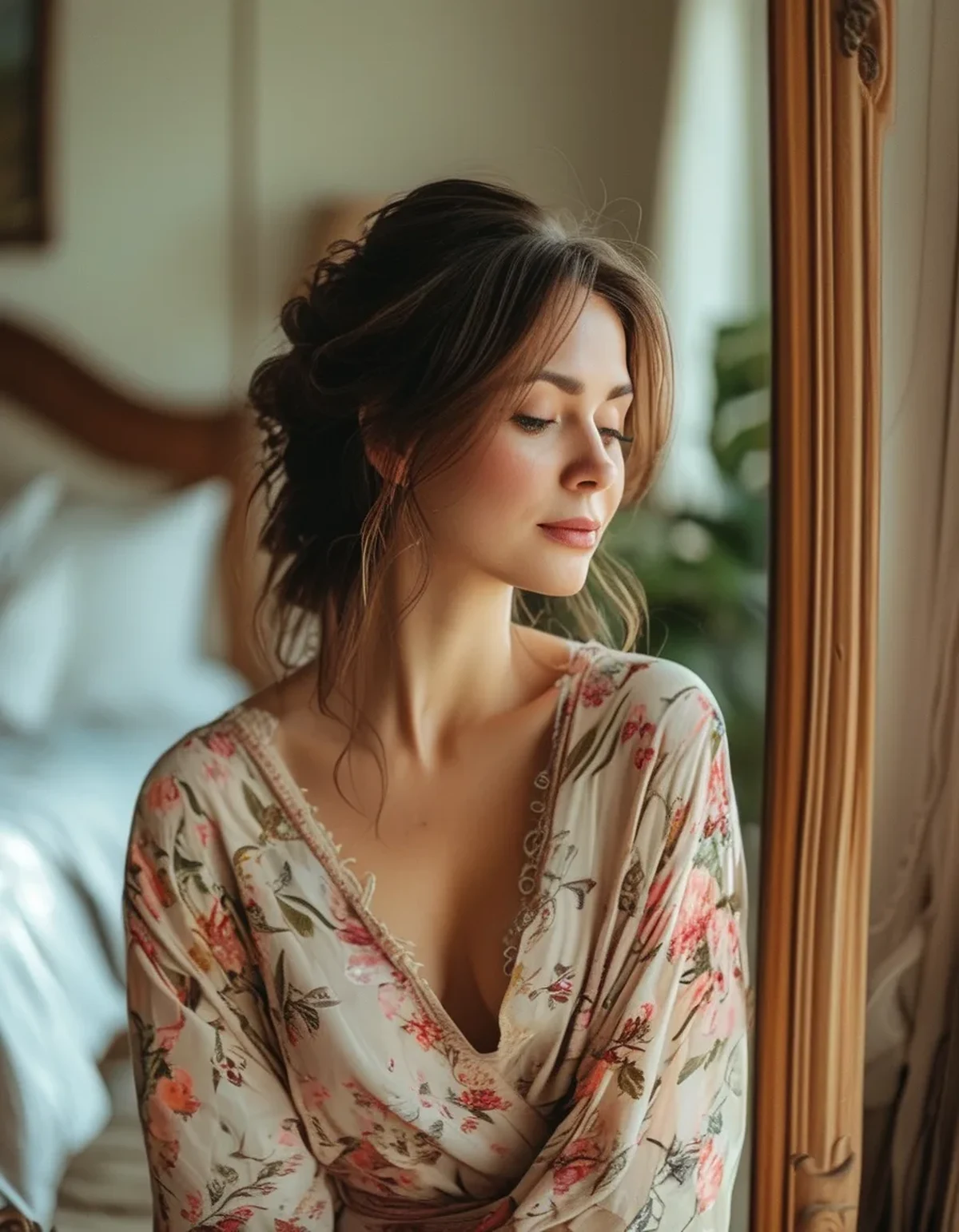
Myth vs Fact: What’s Really Behind the Photo-to-Mirror Gap
Myth: if it doesn’t look like the photo, the sizing is wrong. Fact: sizing can be a factor, but lighting, angle, and posing differences alone can account for most of the visual gap even in a correctly sized garment.
Myth: models and reviewers just have different bodies, so comparison is pointless. Fact: while body shape does affect fit, the same reviewer’s own photos would look noticeably different taken in a home mirror versus their styled photo — the format itself, not just body difference, drives a lot of the gap.
Myth: professional photos are ‘real,’ just better taken. Fact: most are selected from many shots and often lightly edited, meaning they represent a best-case outcome rather than a typical one.
Is there a more reliable way to judge fit before relying on photos at all?
Checking specific measurements against a brand’s actual size chart, rather than relying primarily on how a photo looks, gives a much more reliable prediction of real-world fit, since a measurement comparison isn’t affected by lighting, angle, or posing the way a photo comparison is. Reading reviews for specific fit notes (runs small, fabric is thinner than expected) tends to be more useful than looking at photos alone for this same reason.
FAQ: Review Photos and Mirror Fit Questions, Answered
Are influencer or reviewer photos edited before posting?
Often yes, at least lightly — even unpaid, casual reviewers frequently use basic phone editing (brightness, minor smoothing) without necessarily disclosing it, which adds another layer of difference beyond lighting and angle alone.
Does the same outfit ever look better in a mirror than in a photo?
Yes, sometimes — flat photography can occasionally flatten out texture or drape that actually reads nicely in person and in motion, so the gap isn’t always in the photo’s favor.
What’s a quick way to get a more photo-like check at home?
Standing near a window with soft natural light rather than harsh overhead lighting, and taking a few photos from slightly different angles rather than relying on a single mirror glance, gets closer to a fair comparison without needing professional setup.
TL;DR:
- Review photos use flattering lighting and camera angles a home mirror doesn’t replicate
- Posed stances held for a single shot change how fabric drapes compared to natural standing
- Editing and photo selection mean review photos represent a best-case outcome, not a typical one
- Measurements and written fit notes are a more reliable comparison tool than photos
- The mismatch is mostly a photography gap, not a signal that something is wrong with fit
The mirror isn’t lying — it’s just working with completely different lighting and angle rules than the photo was.
Keep Reading
This article is for general informational and styling purposes only. Fit, sizing, and product availability may vary.
