Why the Exact Same Labeled Dress Size Fits So Differently From One Brand to the Next
Quick Answer: There’s no single mandatory sizing standard that all clothing brands follow — each brand develops its own size chart based on its own target customer measurements, design philosophy, and historical sizing decisions, which means a labeled size on the tag reflects that brand’s internal reference, not a universal, cross-brand measurement standard, explaining why the same size number can correspond to genuinely different actual body measurements between brands.
A size label is really a brand-specific code, not a universal measurement — which is exactly why trusting the number alone across different brands leads to so much fitting-room frustration.

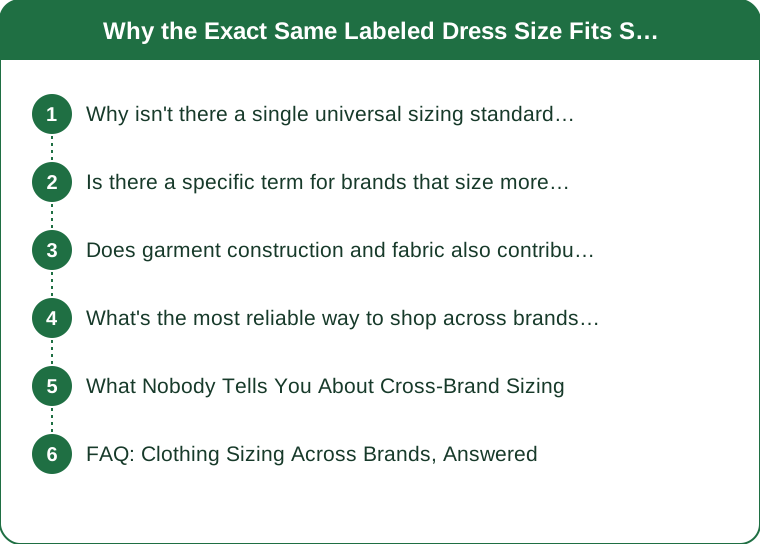
Why isn’t there a single universal sizing standard that all clothing brands are required to follow?
Clothing sizing standards are largely voluntary and brand-specific in most markets, without a single enforced regulatory measurement standard that all retailers must use. Each brand develops sizing based on its own target customer research, historical size chart decisions, and sometimes deliberate brand positioning (some brands size more generously as a customer-retention strategy), which is why size charts have meaningfully diverged over time across the industry.
Is there a specific term for brands that size more generously to make customers feel good about their size label?
Yes — this is often referred to as “vanity sizing,” where a brand’s size 8, for example, is cut with actual measurements that might correspond to a smaller labeled size elsewhere. This is a deliberate brand and marketing decision in many cases, not an accident, which is part of why relying on a remembered size number when shopping a new brand for the first time is a particularly unreliable strategy.
Does garment construction and fabric also contribute to fit differences, separate from the size chart itself?
Yes, meaningfully — fabric with more stretch (higher elastane content) fits more forgivingly across a size range than a rigid, non-stretch fabric cut to the same size chart numbers, and construction details like seam placement and dart positioning affect how a garment actually sits on a body even at an identical measurement. Two dresses labeled the same size from different brands can differ in actual fit both from size chart differences and from these construction factors combined.

What’s the most reliable way to shop across brands, given this size chart inconsistency?
Checking each brand’s specific size chart against actual body measurements, rather than relying on a remembered size number, is the single most reliable method, since brand size charts are usually published with corresponding body measurements. Reading fit reviews specific to the exact brand and item, when available, adds useful real-world confirmation beyond the size chart’s stated numbers alone.
What Nobody Tells You About Cross-Brand Sizing
Even within a single brand, sizing can shift somewhat between different garment categories or over time as a brand updates its size chart, meaning brand consistency itself isn’t fully guaranteed either — checking the size chart for the specific item and current collection, rather than assuming a past experience with the same brand still holds exactly, avoids a fit surprise even from previously reliable brands.
FAQ: Clothing Sizing Across Brands, Answered
Is it worth measuring your own body and keeping those measurements on hand for shopping?
Yes, this is one of the most reliable long-term strategies — comparing personal measurements directly against each brand’s published size chart removes most of the guesswork a remembered size number introduces.
Do online-only brands tend to have more sizing inconsistency than brands with physical stores?
Not inherently, though online-only brands sometimes have less established size chart history, making detailed size charts and customer fit reviews especially valuable when shopping them for the first time.
Does this size chart inconsistency apply similarly across different clothing categories, like tops versus bottoms?
Yes, and sometimes even more so — top and bottom sizing can diverge within the same brand for a given body, since torso and lower-body proportions don’t scale identically across every size chart’s assumptions.
TL;DR:
- There’s no enforced universal sizing standard, so each brand sets its own size chart independently
- Vanity sizing is a deliberate brand strategy that further widens the gap between labeled size and measurement
- Fabric stretch and construction details add further fit variation beyond the size chart numbers alone
- Checking actual body measurements against each brand’s specific size chart is the most reliable shopping method
A size label reflects one brand’s internal reference point, not a universal truth — treating it that way, and checking real measurements instead, ends most of the cross-brand fitting-room frustration.
Keep Reading
This article is for general informational and styling purposes only. Fit, sizing, and product availability may vary.
