Why the Exact Same Dress Size Can Photograph Completely Differently Across Two Different Brands
Quick Answer: Clothing size labels aren’t standardized across brands — each company sets its own size chart based on its own target customer and fit model, so a labeled size that matches on paper can differ by multiple actual inches in key measurements between brands, which is why the same size number can look and photograph noticeably differently depending on which brand made it.
A size label is really just that individual brand’s internal reference point, not a universal, interchangeable measurement.

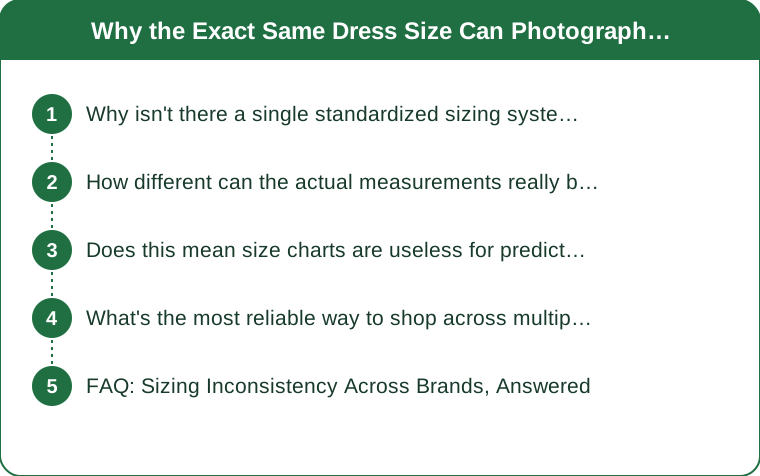
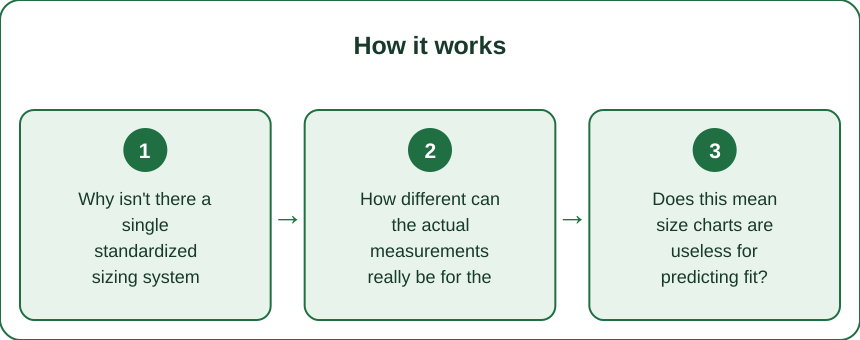
Why isn’t there a single standardized sizing system across brands?
No legally mandated universal sizing standard exists in most markets, so each brand independently determines its own size chart based on its specific fit model and target customer base, which means identical size labels can correspond to genuinely different actual body measurements between companies.
How different can the actual measurements really be for the ‘same’ labeled size?
Differences of two or more inches in bust, waist, or hip measurement for the same labeled size between brands are common and well-documented, which is a large enough difference to visibly change fit and how a garment photographs on the same body.

Does this mean size charts are useless for predicting fit?
Not useless, but brand-specific size charts (actual measurements, not just the size label) are far more reliable than comparing size numbers across brands — checking the specific garment’s measurement chart, not just matching your usual size number, is the more accurate approach.
What’s the most reliable way to shop across multiple brands given this inconsistency?
Keeping your own actual body measurements on hand and comparing them directly to each brand’s specific size chart, rather than assuming your size number carries over, consistently produces better fit predictions than relying on size labels alone.
FAQ: Sizing Inconsistency Across Brands, Answered
Are certain categories of clothing more prone to this inconsistency than others?
Fitted categories like dresses and tailored tops tend to show size inconsistency more visibly than looser categories like oversized sweaters, where fit differences matter less.
Does this sizing inconsistency happen within a single brand too, across different garment types?
Yes, to a lesser degree — even within one brand, a fitted dress and a relaxed tee can fit differently at the same labeled size due to different fit models used per category.
Is there a trend toward standardizing sizing across the industry?
Some individual efforts exist, but no universal industry standard currently governs sizing, so checking brand-specific charts remains the most reliable approach for now.
TL;DR:
- No universal sizing standard exists, so each brand sets its own independent size chart
- Actual measurements for the ‘same’ labeled size can differ by two or more inches between brands
- Brand-specific measurement charts are far more reliable than comparing size numbers alone
- Keeping your own measurements handy and checking them against each chart improves fit accuracy
Keep Reading
This article is for general informational and styling purposes only. Fit, sizing, and product availability may vary.
