Why What You Wear Underneath Changes the Fit Verdict More Than the Size Does
Quick Answer: Underlayers change a garment’s fit more than a size increment does. A different bra alone can shift bust position by an inch or more, which changes where a waist seam sits, how a neckline falls, and whether a fitted top pulls. Since a size step is often only one to two inches of total circumference, the underlayer is frequently the larger variable. Trying clothes on over whatever you happened to wear that day is why fitting room verdicts so often fail at home.
The fix is to try things on over what you will actually wear them with — which sounds obvious and almost nobody does.
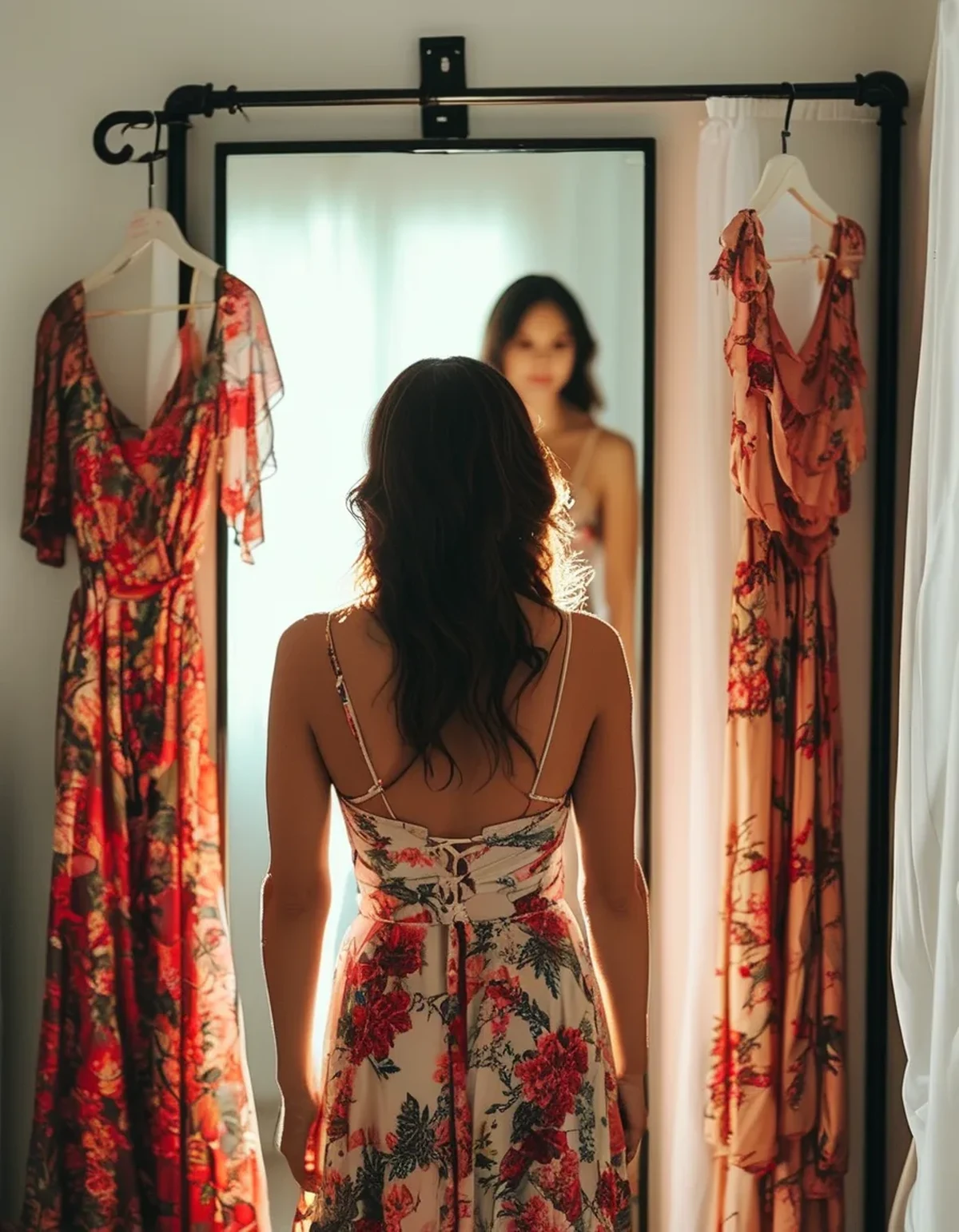
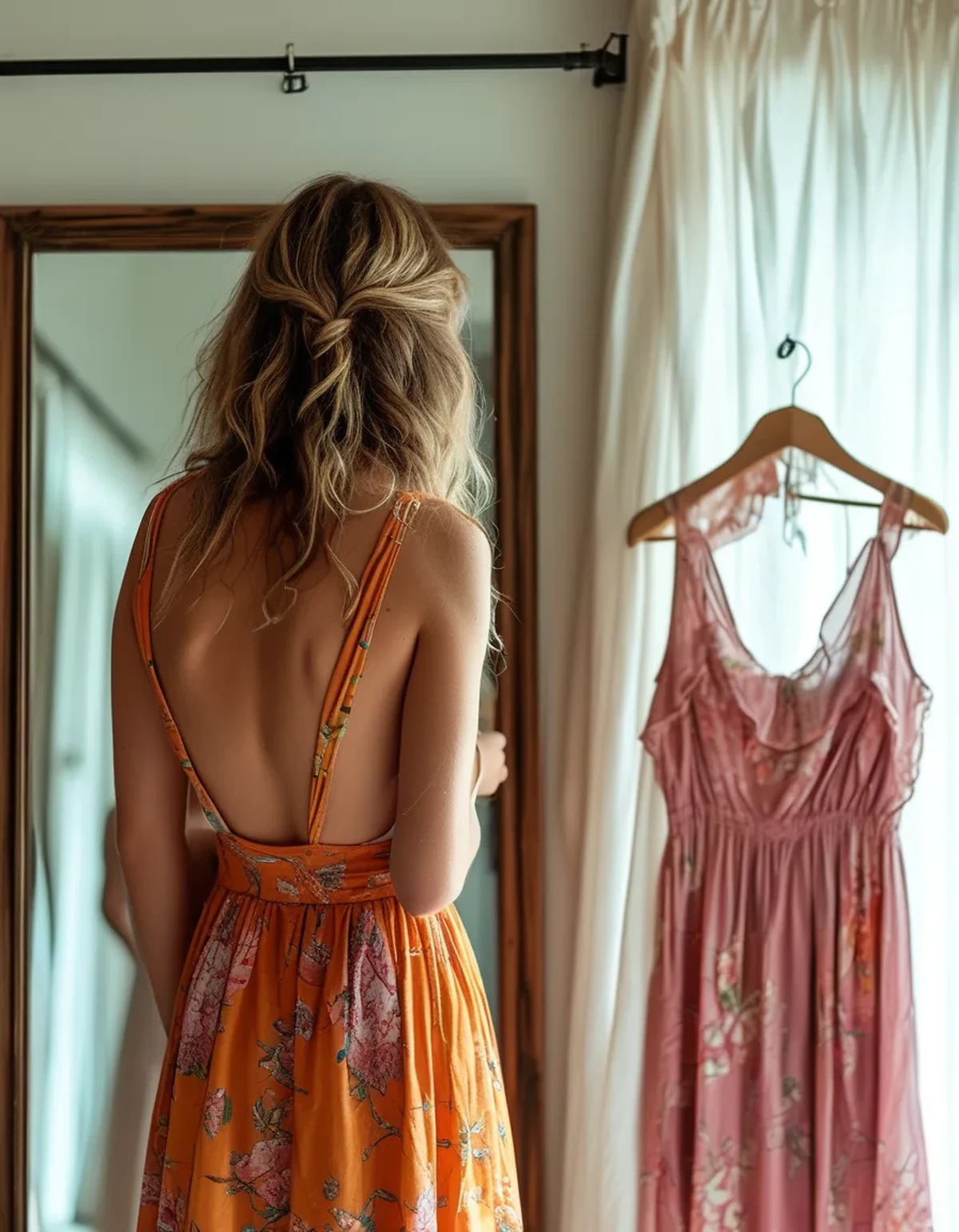
How much does a bra actually change a garment’s fit?
Enough to change the size you would choose.
A supportive bra and an unstructured one can position the bust differently by a substantial margin — often an inch or more in height. That sounds small and it moves everything above and below it.
Where the bust sits determines where the narrowest point of your torso appears to be, and a fitted garment is drafted around an assumed relationship between bust point and waist. Change the bust position and a waist seam that sat at your natural waist now sits above or below it.
There are knock-on effects everywhere. A neckline that lay flat now gaps, or now pulls. A wrap top that crossed at a modest point now crosses higher or lower. A shift dress that skimmed now catches.
The circumference effect is separate and also real. A padded or heavily structured bra can add a measurable amount to bust circumference, which is a meaningful fraction of a full size step. A garment that fits over a lightly lined bra can genuinely be too tight over a padded one.
And this is only the bust. Underwear with a defined waistband changes how a fitted skirt or trouser sits. Shapewear changes silhouette substantially. Even the thickness of a base layer or camisole changes how outer garments drape.
A single size step in most brands is around one to two inches of total circumference. The underlayer routinely accounts for as much or more than that, which is why it deserves at least as much attention as the size on the tag.
Why do fitting rooms make this worse?
Because everything about the environment encourages a decision on the wrong information.
You are wearing whatever you wore that day. If you came from the gym, you are trying on a dress over a compression sports bra. If you came from work, it is whatever was under your work clothes. Neither is what you will wear the garment with.
The lighting and mirror are unfamiliar, so you are already discounting some of what you see, which makes you less likely to notice a fit issue and more likely to attribute it to the room.
You are standing, and often only for a minute. Most garments are worn seated for a large share of their life, and fit changes when you sit.
Time pressure is real. The average fitting room session is short, and thoroughness feels like an imposition even when nobody is waiting.
There is one more factor that is specific to this problem. People are much more likely to bring a second garment into a fitting room than a second bra, because underlayers do not feel like part of the outfit decision. They are treated as infrastructure rather than as a variable.
The consequence shows up predictably. A garment is bought, worn once at home over different underwear, and now pulls at the bust or gaps at the neckline. The natural conclusion is that the sizing was wrong or the brand is inconsistent. Sometimes it is, and often the garment is exactly the same and the conditions changed.
Myth vs Fact: Fit and Underlayers
Myth: If it fits in the store, it fits. Fact: It fits over what you were wearing in the store. That is a narrower claim than it feels like at the moment of purchase.
Myth: A better bra always improves how clothes look. Fact: A well-fitted bra improves most outcomes and is not universally the right choice for every garment. Some styles are drafted for a softer, lower bust line and look wrong over a highly structured bra. Matching the underlayer to the garment beats defaulting to the same one.
Myth: Sizing inconsistency between brands is the main problem. Fact: Brand variation is real and substantial. It is also frequently blamed for effects that were actually caused by different underlayers on different days.
Myth: Shapewear solves fit problems. Fact: It changes the silhouette and redistributes rather than removing, and it changes how fabric sits — often creating a smoother line and sometimes creating a new edge where the garment ends. It is a tool with its own fit consequences, not a universal fix.
Myth: Seamless underwear is invisible under everything. Fact: Seamless removes the seam line and does not remove the edge. Under a very smooth, thin, or light-colored fabric, the edge of a seamless piece is often more visible than a well-chosen alternative.
Myth: You can judge this from a photo of yourself. Fact: A photo captures a moment and a posture. It is genuinely useful, and it does not replace sitting down, raising your arms, and walking a few steps in the garment.
What does a reliable fitting routine look like?
Six steps, and it adds about two minutes.
Wear, or bring, the underlayer you intend to use with the garment. If you are shopping for a fitted dress for an event, wear the bra you plan to wear to the event. This single change resolves the majority of fit surprises.
If you are shopping generally, wear your most-used everyday underlayer. Whatever you wear four days a week is the honest default, and it is the condition most of your clothes will live in.
Sit down. Check the waist, the hem, and any pulling across the hip and thigh. Standing fit is half the information.
Raise your arms and reach forward. This is where sleeves, shoulders, and back width reveal themselves, and it is the most commonly skipped check.
Walk a few steps. Fabric that moves with you and fabric that stays put behave differently, and you learn that in about five paces.
Take one photo from the side. Front-facing mirrors hide almost everything about drape and hem position. The side view is where the actual line shows up.
One timing point worth adding, since late summer is peak transitional shopping season. Bodies are measurably different in the evening than the morning — some fluid retention, some digestion — and the difference is enough to change how a fitted waistband feels. If you shop in the evening for something you will wear in the morning, or the reverse, factor it in.
Also worth flagging for this specific moment in the year: autumn shopping means trying summer-weight bodies into layered outfits. A dress tried on bare-armed in an air-conditioned store in August will be worn over a long sleeve or under a jacket in October, and that layer has to fit inside the garment. Bringing the layer, or at least thinking about it, is the difference between a piece that gets worn and one that does not.
FAQ: Fitting Questions, Answered
How different can two bras really make one garment look?
Enough to change your size choice on a fitted garment. On a loose or unstructured piece, much less. The tighter the garment through the torso, the larger the effect.
Should I bring multiple underlayers to a fitting room?
For a significant purchase — an event dress, a tailored piece — yes, and it feels excessive and it is the single highest-value thing you can do. For everyday shopping, wearing your usual default is enough.
Why does the same size fit differently across my own closet?
Different brands, different fabrics, different drafting assumptions, and different underlayers on the days you bought each one. The last of those explains more of the variation than most people assume.
TL;DR:
- A different bra can shift bust position by an inch or more, which changes waist seam placement, neckline behavior, and whether a fitted top pulls.
- A full size step is often only one to two inches of circumference, so the underlayer is frequently the bigger variable.
- Fitting rooms make this worse: you wear whatever you arrived in, stand for a minute, and never bring a second underlayer.
- Try things on over what you will actually wear them with, then sit, reach, walk, and take one side photo.
For the next significant purchase, bring the bra you plan to wear with it. It is the cheapest way to stop returning things.
Keep Reading
This article is for general informational and styling purposes only. Fit, sizing, and product availability may vary.
